

Speech Development Activities for Preschoolers | Best Preschool in Delhi.

The preschool years are an important time for language and speech development. Children are learning new words, forming sentences, expressing emotions, asking questions, and discovering how to communicate with people around them.
Simple, playful activities can make speech development enjoyable and natural. Storytelling, rhymes, picture talk, role-play, puppet games, singing, Show and Tell, and everyday conversations can encourage preschoolers to listen, understand, speak, and express their ideas.
For parents looking for the Best Preschool in Delhi, it is important to choose an environment where communication is encouraged through meaningful interactions and age-appropriate learning.
At Kaiser Valley Future Ready AI Preschool, children can explore language and communication through play-based activities, classroom conversations, creative experiences, storytelling, and interactive learning.
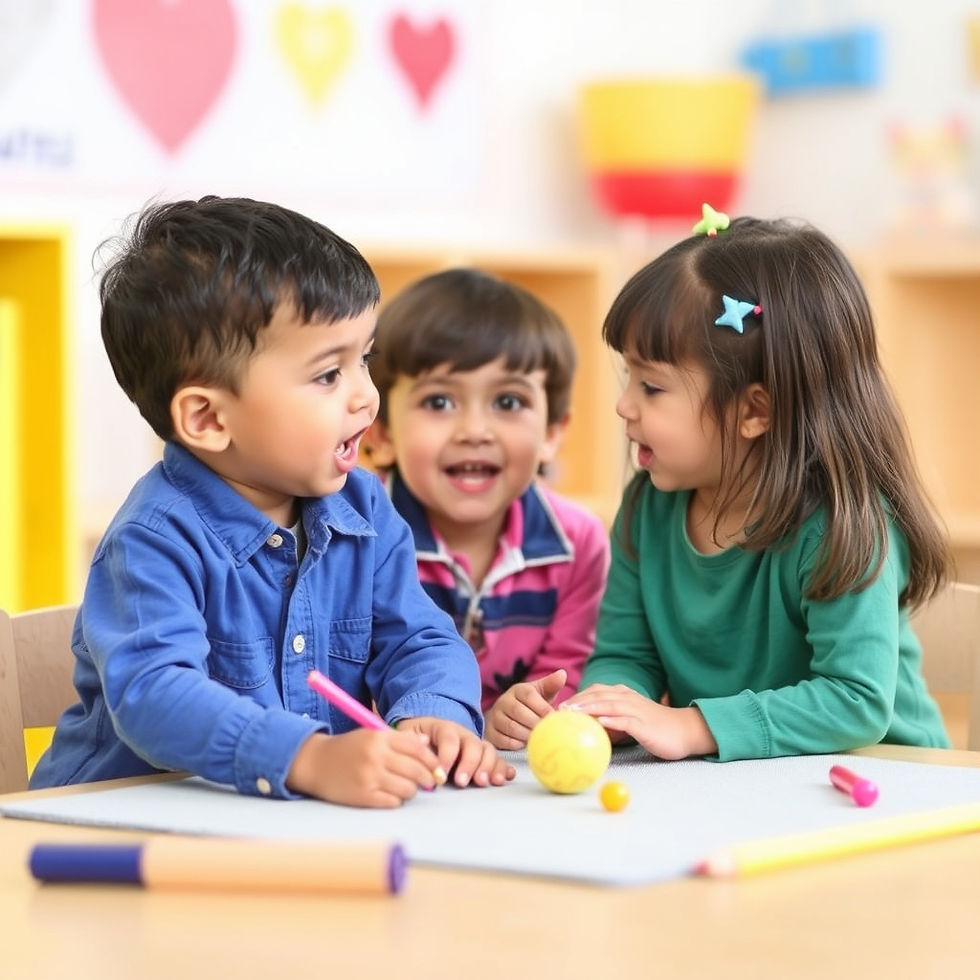
What Is Speech Development in Preschoolers?
Speech development refers to the gradual development of a child's ability to produce sounds, words, phrases, and sentences clearly enough to communicate.
Language development is closely connected to speech. Children also learn to:
Understand what others say
Learn new vocabulary
Express needs and feelings
Ask and answer questions
Follow instructions
Participate in conversations
Tell stories
Describe experiences
Listen to others
Every child develops at their own pace, so activities should be supportive rather than competitive.
Why Is Speech Development Important?
Strong communication skills can help children participate more confidently in family life, preschool activities, friendships, and future classroom learning.
1. Builds Communication Skills
Speech activities give children regular opportunities to express their thoughts, needs, questions, and feelings.
2. Expands Vocabulary
Talking about familiar objects, pictures, stories, animals, food, and daily activities introduces children to new words.
3. Improves Listening
Children learn that communication involves both speaking and listening.
4. Builds Confidence
When children are encouraged to speak without fear of mistakes, they can gradually become more comfortable expressing themselves.
5. Supports Social Development
Communication helps children interact with friends, share ideas, take turns, solve small disagreements, and participate in group activities.
6. Encourages Early Literacy
Listening to stories, learning rhymes, talking about pictures, and playing with sounds can create a foundation for later reading and writing.
15 Speech Development Activities for Preschoolers
1. Picture Talk
Show your child a colorful picture and ask them to describe what they see.
Try questions such as:
What do you see?
Who is in the picture?
What are they doing?
What color is the object?
What do you think will happen next?
Picture talk encourages vocabulary, observation, sentence formation, and imagination.
2. Storytelling
Storytelling is one of the most effective ways to encourage language development.
Read a short story and then ask your child to retell it in their own words.
You can also ask:
"What happened first?""What happened next?""How did the character feel?"
Storytelling helps children practice vocabulary, sequencing, memory, and expressive language.
3. Rhymes and Songs
Rhymes and children's songs make speech practice fun.
Children can learn:
New vocabulary
Rhythm
Pronunciation
Listening
Memory
Expression
Encourage your child to sing along and use actions wherever appropriate.
4. Puppet Conversations
Puppets can make communication feel like play.
Create two characters and let your child have a conversation with them.
For example:
Puppet 1: "Hello! What is your name?"Puppet 2: "My name is Bunny."
Then allow your child to create their own conversation.
5. Show and Tell
Ask your child to choose a favorite toy, book, drawing, or object.
Encourage them to explain:
What is it?
What is its name?
Where did they get it?
Why do they like it?
What can they do with it?
Show and Tell can help children become more comfortable speaking in front of others.
6. Pretend Play and Role-Play
Pretend play provides natural opportunities for conversation.
Children can pretend to be:
Doctors
Teachers
Shopkeepers
Chefs
Pilots
Farmers
Community helpers
Role-play encourages children to use words in meaningful situations.
7. Sound Games
Make speech practice playful by focusing on sounds.
For example:
"Can you find something that starts with /b/?"
Children can search for:
Ball
Book
Bag
Banana
Keep sound games simple and enjoyable.
8. "What Am I?" Game
Choose an object without showing it.
Give clues:
"I am round. I am orange. You can eat me. What am I?"
The child guesses the answer.
Then let the child create clues for you.
This activity encourages vocabulary, listening, reasoning, and sentence construction.
9. Daily Conversation Time
You do not need special materials to support speech development.
Talk to your child during everyday activities.
Ask:
"What should we make for lunch?"
"Which shirt would you like to wear?"
"What did you enjoy at school today?"
Real conversations provide valuable opportunities for language development.
10. Story Completion
Start a simple story and let your child finish it.
For example:
"One morning, a little rabbit opened the door and saw..."
Let the child decide what happens next.
There is no need for a "correct" answer. The goal is to encourage imagination and expression.
11. Object Description Game
Choose a familiar object and ask your child to describe it.
For example:
"Tell me about this apple."
The child might say:
"It is red. It is round. I can eat it."
You can gently expand the conversation:
"Yes, it is a red, round apple. What does it taste like?"
12. Question-and-Answer Games
Ask simple questions and encourage complete responses.
Instead of:
"Do you like mangoes?"
also try:
"Why do you like mangoes?"
Open-ended questions encourage children to use more language.
13. Matching Words With Actions
Connect words with physical actions.
For example:
Jump
Clap
Run
Walk
Sleep
Dance
Say the word and let the child perform the action.
This can make vocabulary learning interactive.
14. Family Story Circle
Create a short family storytelling session.
Each person adds one sentence.
For example:
Parent: "Once there was a little bird."Child: "The bird wanted to find a new home."Parent: "So it flew over a big forest."
This activity combines listening, memory, creativity, and speaking.
15. Pretend Telephone Conversations
Use a toy telephone or simply pretend to make a call.
Ask your child to practice:
"Hello, how are you?"
"What are you doing?"
"I am going to the park."
Pretend conversations can help children practice everyday communication.
Speech Development Activities for Different Ages
Children develop at different rates, but activities can be adjusted according to their age and abilities.
Younger Preschoolers
Focus on:
Naming objects
Simple questions
Songs
Rhymes
Picture books
One- and two-step instructions
Everyday conversations
Older Preschoolers
Introduce:
Story retelling
Picture descriptions
Role-play
Show and Tell
Longer conversations
Story creation
Group discussions
Simple presentations
The key is to keep activities enjoyable and appropriate for the child's developmental stage.
How Parents Can Support Speech Development at Home
Parents are a child's first communication partners.
Here are some simple strategies.
Talk During Everyday Activities
Describe what you are doing while cooking, shopping, cleaning, or traveling.
Read Every Day
Ask questions about the story instead of only reading the words.
Listen Patiently
Give your child enough time to finish their thought.
Expand Their Sentences
If your child says:
"Dog running."
You can respond:
"Yes, the brown dog is running in the park."
This models richer language without making the child feel corrected.
Encourage Questions
Children learn through curiosity. Give them opportunities to ask "why," "how," "what," and "where."
Limit Pressure
Avoid repeatedly saying:
"Say it again."
Instead, model the correct word naturally and continue the conversation.
How Preschool Supports Speech Development
A quality preschool can provide communication opportunities throughout the day.
Children can practice speech during:
Circle time
Storytelling
Group discussions
Rhymes
Music
Role-play
Creative activities
Outdoor play
Show and Tell
Classroom routines
Peer interactions
These experiences allow children to use language for real purposes.
For parents searching for the Best Preschool in Delhi, look for a learning environment where children are encouraged to speak, listen, ask questions, and communicate confidently.
Speech Development at Kaiser Valley Future Ready AI Preschool
At Kaiser Valley Future Ready AI Preschool, communication can be integrated into play-based and interactive learning experiences.
Children can participate in activities such as:
Storytelling
Rhymes and songs
Puppet conversations
Show and Tell
Picture description
Role-play
Group discussions
Vocabulary games
Creative storytelling
Question-and-answer activities
Confidence-building activities
AI-supported educational experiences
The objective is to create opportunities for children to learn through interaction rather than relying only on worksheets or memorization.
Can AI Support Speech and Language Learning?
Technology can complement traditional preschool learning when it is used thoughtfully and age-appropriately.
AI-supported educational activities may provide opportunities for:
Interactive storytelling
Vocabulary practice
Picture-based conversations
Question-and-answer activities
Educational games
Personalized learning experiences
Creative prompts
However, technology should complement—not replace—real conversations with parents, teachers, and other children.
Human interaction remains an essential part of early communication development.
Speech Development Through Play
Children often learn best when they are having fun.
During play, children naturally practice communication by:
Giving instructions
Asking questions
Pretending
Negotiating roles
Describing objects
Creating stories
Expressing emotions
Solving problems
This is why play-based learning can be a valuable part of early childhood education.
Common Mistakes Parents Should Avoid
While supporting speech development, avoid:
Comparing your child with other children
Making fun of pronunciation
Constantly correcting every mistake
Finishing every sentence for your child
Pressuring children to speak
Asking too many questions at once
Turning speech practice into an examination
Expecting every child to develop at exactly the same pace
Instead, provide encouragement, patience, listening opportunities, and positive examples.
When Should Parents Seek Professional Advice?
Children develop speech and language skills at different rates. Occasional pronunciation difficulties or differences in speaking style can be part of development.
However, if you have ongoing concerns about your child's ability to understand language, communicate, produce speech sounds, or participate in everyday communication, consider discussing those concerns with your child's pediatrician or a qualified speech-language professional.
Early guidance can help families understand what support may be appropriate.
Why Communication Skills Matter Before Primary School
Before entering primary school, children benefit from being able to:
Follow classroom instructions
Ask for help
Express their needs
Answer simple questions
Participate in conversations
Listen to teachers
Communicate with classmates
Share ideas
Describe experiences
Speech development activities can help children practice these everyday skills in a natural setting.
Why Choose the Best Preschool in Delhi?
When parents search for the Best Preschool in Delhi, they may consider more than academics.
A well-rounded preschool experience can support:
Speech and language development
Communication
Confidence
Social skills
Creativity
Emotional development
Problem-solving
Independence
Collaboration
School readiness
Kaiser Valley Future Ready AI Preschool focuses on creating engaging learning experiences that encourage children to communicate, explore, create, and participate.
Frequently Asked Questions
What are the best speech development activities for preschoolers?
Storytelling, rhymes, picture talk, puppet conversations, Show and Tell, role-play, sound games, object description, pretend telephone conversations, and everyday family discussions are useful speech development activities for preschoolers.
How can I improve my preschooler's speech at home?
Talk with your child regularly, read together, ask open-ended questions, encourage storytelling, listen patiently, introduce new vocabulary, and model clear language during everyday activities.
Does storytelling help speech development?
Yes. Storytelling gives children opportunities to practice vocabulary, sentence formation, sequencing, memory, imagination, and expressive communication.
Are rhymes good for preschool speech development?
Rhymes and songs can make language practice enjoyable while giving children opportunities to practice sounds, rhythm, vocabulary, memory, and expression.
How does play help speech development?
During pretend play and group games, children naturally practice conversations, questions, instructions, storytelling, social interaction, and emotional expression.
How does preschool support speech development?
Preschool provides regular opportunities for children to listen, speak, participate in group activities, interact with peers, follow instructions, tell stories, and communicate with teachers.
When should I be concerned about my child's speech?
If you have persistent concerns about your child's ability to understand or use language or communicate effectively in everyday situations, discuss those concerns with your child's pediatrician or a qualified speech-language professional.
Why choose Kaiser Valley Future Ready AI Preschool?
Kaiser Valley Future Ready AI Preschool combines play-based learning, communication activities, storytelling, social interaction, creative experiences, and age-appropriate AI-supported learning to help children develop confidence and become future-ready learners.
Conclusion
Speech development is an important part of early childhood learning. Children do not need complicated lessons to improve their communication. Everyday conversations, stories, songs, picture games, role-play, puppets, Show and Tell, and creative play can provide meaningful opportunities to speak and listen.
The most important thing parents and teachers can provide is time, patience, encouragement, and opportunities to communicate.
At Kaiser Valley Future Ready AI Preschool, children can develop communication skills through engaging, play-based, and interactive experiences designed to encourage curiosity, confidence, creativity, and self-expression.
For parents looking for the Best Preschool in Delhi, a preschool that values communication alongside academic, social, emotional, and creative development can give children a strong foundation for their next stage of learning.
Every conversation is an opportunity to learn a new word, express a new idea, and find a stronger voice.

Comments