

Stage Fear in Kids: Easy Solutions | Best Preschool in Delhi.

Many children feel nervous when they are asked to speak, sing, perform, or participate in front of other people. A racing heart, quiet voice, hesitation, hiding behind a parent, or saying "I don't want to go" can all be signs of stage fear in kids.
For young children, this is often a normal part of learning how to handle unfamiliar social situations. With patience, encouragement, practice, and age-appropriate activities, children can gradually become more comfortable expressing themselves.
At Kaiser Valley Future Ready AI Preschool, we believe confidence develops through positive experiences rather than pressure. Storytelling, rhymes, role-play, Show and Tell, group activities, and small presentations can help children discover that speaking in front of others can be enjoyable.
For families searching for the Best Preschool in Delhi, a supportive preschool environment can play an important role in developing communication, confidence, social skills, and school readiness.
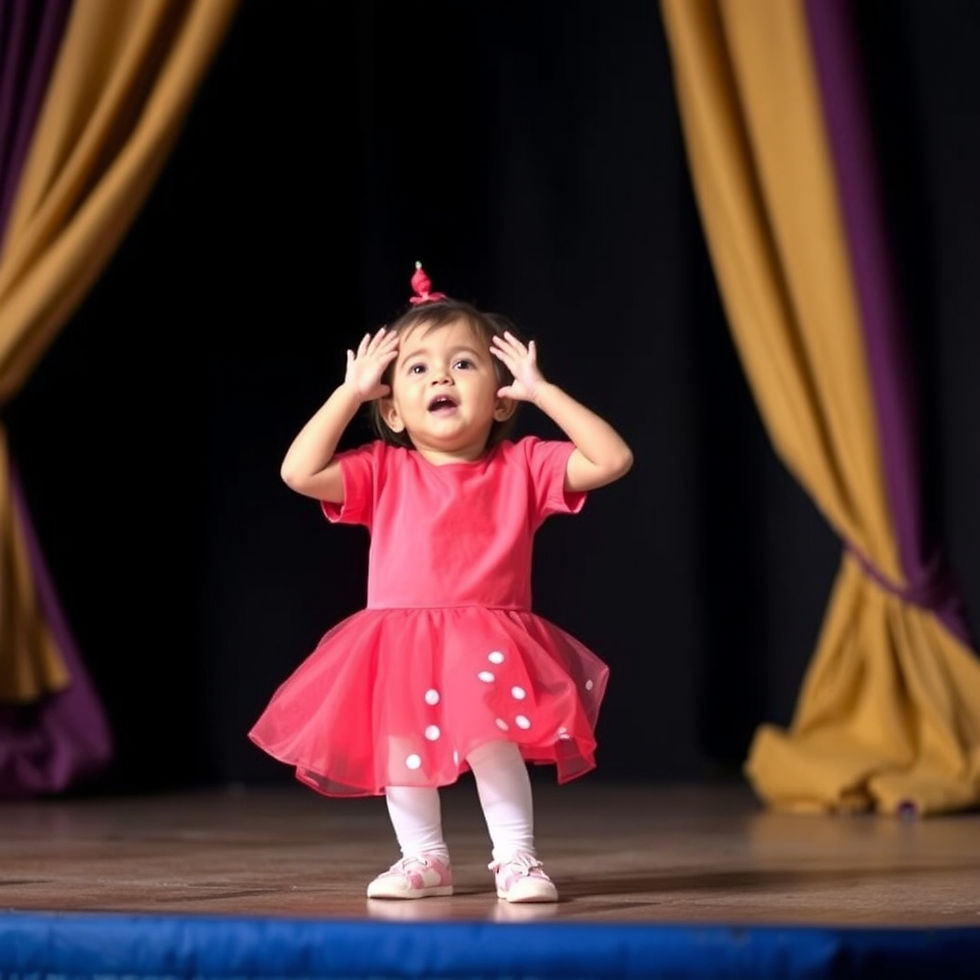
What Is Stage Fear in Kids Best Preschool in Delhi?
Stage fear is the nervousness or discomfort a child may experience when expected to perform or speak in front of an audience.
A child may experience stage fear when:
Speaking in front of classmates
Reciting a poem
Performing on stage
Singing a song
Giving a presentation
Participating in a school function
Meeting unfamiliar people
Not every nervous child has a problem. Feeling a little nervous before performing can be completely normal.
The goal is not to eliminate every feeling of nervousness. Instead, children can learn simple ways to manage those feelings and participate at their own pace.
Common Signs of Stage Fear in Children
Stage fear can look different from child to child.
Common signs include:
Avoiding eye contact
Speaking very quietly
Refusing to go on stage
Holding tightly onto a parent or teacher
Forgetting prepared words
Becoming unusually quiet
Crying or becoming upset
Complaining of feeling uncomfortable
Asking repeatedly not to perform
Parents and teachers should respond with patience rather than criticism.
Why Do Children Experience Stage Fear?
Several factors can contribute to stage fear.
Fear of Making Mistakes
Children may worry that they will forget their words or say something incorrectly.
Unfamiliar Situations
Performing in front of a large group can feel very different from talking to family members.
Limited Practice
A child who has had few opportunities to speak publicly may naturally feel nervous.
Fear of Being Judged
Children may worry about what classmates, teachers, or adults will think.
Personality Differences
Some children naturally enjoy being the center of attention, while others prefer observing before participating.
Understanding the reason behind a child's nervousness can help adults provide better support.
10 Easy Solutions for Stage Fear in Kids
1. Never Force a Child Suddenly
Forcing a nervous child onto a stage can make the experience more frightening.
Instead, prepare them gradually.
Start with:
Speaking to a parent → Speaking to a sibling → Speaking to a small group → Speaking to classmates → Short performance
Gradual exposure can help children feel more comfortable.
2. Start With Small Performances
A child does not need to begin with a large audience.
Try:
Talking to family members
Telling a story to one friend
Reciting a rhyme for a parent
Performing for a small group
Speaking during circle time
As confidence increases, the audience can gradually become larger.
3. Practice Through Play
Practice should feel like fun rather than an examination.
Use:
Puppet shows
Pretend stages
Role-play
Storytelling
Toy microphones
Singing games
Dress-up activities
When children play the role of a performer, they can practice speaking without feeling like they are being tested.
4. Encourage Storytelling
Storytelling is one of the easiest ways to develop communication confidence.
Ask your child to:
Tell a favorite story
Describe a picture
Create a new story
Explain what happened in a book
Invent a character
Storytelling improves vocabulary, memory, expression, and confidence.
5. Use Show and Tell
Show and Tell allows children to talk about something familiar.
A child might bring a favorite toy and explain:
"This is my teddy bear. I got it for my birthday. I like it because it is soft."
Because the child already knows the subject, speaking can feel easier.
6. Teach Simple Breathing
When children feel nervous, simple breathing can help them slow down and prepare.
Try:
Breathe in slowly → Pause briefly → Breathe out slowly
Practice this when the child is calm so that it becomes familiar before a performance.
For young children, keep breathing activities simple and playful.
7. Focus on Effort, Not Perfection
Avoid saying:
"You must not make a mistake."
Instead say:
"Just try your best. I am proud of you for trying."
This reduces pressure and teaches children that participation matters more than perfection.
8. Let Children Choose Their Performance
Giving children some control can increase confidence.
Ask:
"Would you like to tell a story or sing a rhyme?"
Choices help children feel involved rather than forced.
9. Celebrate Small Progress
Confidence develops through small successes.
Celebrate moments such as:
Speaking one sentence
Standing in front of a group
Making eye contact
Completing a rhyme
Answering a question
Trying again after forgetting something
Small achievements can build motivation for the next challenge.
10. Avoid Comparing Children
Never tell a nervous child:
"Why can't you perform like your friend?"
Every child has a different personality and development pace.
Instead, focus on individual progress.
"You were nervous yesterday, but today you tried. That's progress."
Confidence-Building Activities for Preschoolers
Preschool can provide regular opportunities for children to practice communication.
Useful activities include:
Storytelling
Children tell stories using books, pictures, or imagination.
Puppet Shows
Puppets create a comfortable way to practice conversations.
Rhymes
Children practice pronunciation, rhythm, memory, and expression.
Role-Play
Pretend situations help children practice real-life conversations.
Circle Time
Children answer questions and share ideas with classmates.
Show and Tell
Children talk about familiar objects and experiences.
Mini Presentations
Short, age-appropriate presentations gradually introduce public speaking.
How Kaiser Valley Helps Children Overcome Stage Fear
At Kaiser Valley Future Ready AI Preschool, children can develop communication confidence through regular, enjoyable participation.
Our learning activities can include:
Storytelling
Show and Tell
Rhymes and songs
Puppet activities
Role-play
Circle time
Group discussions
Creative presentations
Interactive games
Confidence-building activities
AI-supported educational experiences
The emphasis is on creating a supportive environment where children feel comfortable trying.
The Role of Teachers in Reducing Stage Fear
Teachers can make a significant difference in how children experience public speaking.
A supportive teacher can:
Give children preparation time
Use positive encouragement
Start with small groups
Allow children to practice
Avoid public criticism
Celebrate participation
Offer choices
Use playful activities
Give children opportunities to lead
Children are more likely to participate when they feel emotionally safe.
How Parents Can Help at Home
Parents can support stage confidence through everyday activities.
Practice Family Performances
Create a small family stage where your child can sing or tell a story.
Read Stories Aloud
Take turns reading or retelling short stories.
Encourage Conversations
Ask your child open-ended questions about their day.
Play Pretend Games
Pretend to be teachers, doctors, shopkeepers, or other characters.
Record Practice Performances
If your child enjoys it, record a short performance and watch it together positively.
Keep Practice Short
Young children usually benefit more from short, enjoyable practice than long rehearsals.
What Parents Should Avoid
While helping children overcome stage fear, avoid:
Forcing performances
Laughing at mistakes
Comparing children
Threatening or embarrassing them
Expecting perfection
Practicing for too long
Calling them "shy" repeatedly
Making every performance a major event
The goal is to make speaking feel safe and enjoyable.
Stage Fear and Communication Skills
Stage confidence is closely connected with communication development.
Children who regularly practice speaking can become more comfortable with:
Vocabulary
Sentence formation
Voice expression
Listening
Eye contact
Body language
Conversation
Storytelling
These skills can support both classroom learning and everyday social interactions.
How Play-Based Learning Supports Confidence
Play gives children a safe environment to experiment.
During play, children can:
Take on different roles
Try new conversations
Make decisions
Solve problems
Express emotions
Practice social interaction
At Kaiser Valley Future Ready AI Preschool, play-based activities help children develop communication and confidence naturally.
The Role of AI-Supported Learning
AI-supported learning can complement traditional preschool activities when used appropriately.
Age-appropriate interactive experiences can provide opportunities for:
Storytelling
Vocabulary development
Interactive questions
Educational games
Creative expression
Personalized learning activities
However, technology should complement real-world conversations, play, movement, teacher interaction, and peer relationships.
When Should Parents Seek Extra Support?
Occasional nervousness before performing is common.
However, parents may consider discussing persistent or severe difficulties with a qualified child-development or mental-health professional if a child's fear consistently interferes with everyday communication, school participation, friendships, or normal activities.
The aim is to understand the child's needs and provide appropriate support.
Why Choose Kaiser Valley Future Ready AI Preschool?
Parents searching for the Best Preschool in Delhi often want an environment where children can develop both academic foundations and life skills.
Kaiser Valley Future Ready AI Preschool focuses on:
Confidence building
Communication skills
Storytelling
Social-emotional development
Play-based learning
Creativity
Teamwork
Leadership
School readiness
AI-supported educational experiences
We encourage children to participate at a comfortable pace while providing regular opportunities to express themselves.
Frequently Asked Questions
What is stage fear in kids?
Stage fear is nervousness or discomfort children may experience when speaking, performing, singing, or presenting in front of other people.
How can I help my child overcome stage fear?
Start with small audiences, practice through play, encourage storytelling, use Show and Tell, teach simple calming techniques, celebrate effort, and avoid pressure or comparisons.
Is stage fear normal in preschool children?
Yes. Many young children feel nervous when performing in front of others. Supportive practice and gradual exposure can help them become more comfortable.
Should I force my child to perform on stage?
It is generally better to encourage rather than force a nervous child. Gradual participation can help children develop confidence without making the experience more stressful.
Which activities help reduce stage fear?
Storytelling, puppet shows, role-play, rhymes, Show and Tell, circle time, mini presentations, and pretend-stage games can help children practice speaking in a fun environment.
How does preschool help children with stage fear?
A supportive preschool provides regular opportunities for children to communicate, participate in groups, practice performances, and develop confidence through age-appropriate activities.
Why choose Kaiser Valley Future Ready AI Preschool?
Kaiser Valley Future Ready AI Preschool combines play-based learning, communication activities, confidence-building experiences, social-emotional development, and AI-supported learning to help children become confident and future-ready learners.
Conclusion
Stage fear in kids is often a normal response to unfamiliar situations, especially when children are expected to speak or perform in front of others. The right approach is not to demand immediate confidence but to create small, positive experiences that help children become comfortable gradually.
Storytelling, Show and Tell, puppet shows, role-play, rhymes, group activities, and mini performances can make communication practice enjoyable.
At Kaiser Valley Future Ready AI Preschool, we believe every child develops confidence at their own pace. Through supportive teachers, play-based learning, communication activities, and interactive experiences, children are encouraged to discover their voices and express themselves with greater confidence.
For parents searching for the Best Preschool in Delhi, Kaiser Valley Future Ready AI Preschool provides a nurturing environment where children can learn, communicate, participate, and grow.
Because confidence is not about never feeling nervous—it is about learning that you can try even when you are.


Comments